
Table of Contents
Inflatable Swimming Pool Tent for Outdoor Events
When planning an outdoor event where a swimming pool will be involved, choosing an inflatable swimming pool tent turns out to be more complicated than it seems at first glance. You need to ask yourself several practical questions: How much space will I need around the pool for people to move safely? Will the tent have to withstand strong winds, or are you working in a more sheltered environment? The dimensions of your tent must accommodate your pool size and allow space for steps, loungers, or even a small bar area nearby.
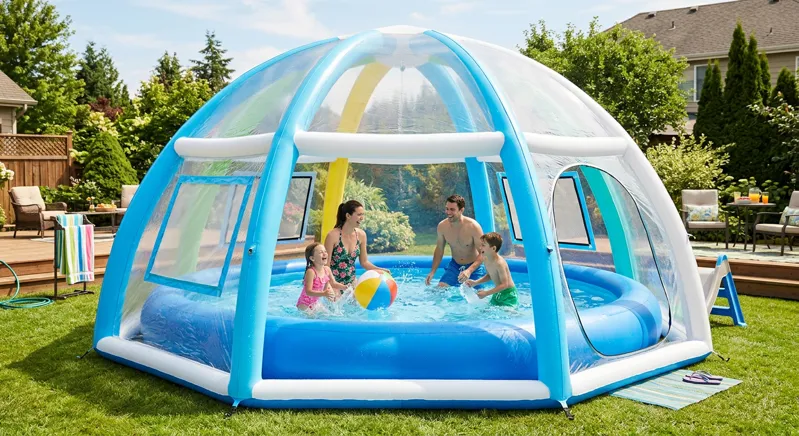
Event planners often underestimate how much clearance is needed around a pool for safe installation and use. An inflatable swimming pool tent that barely covers the pool edge can cause water to splash out, wetting the flooring or nearby electrical equipment, which can quickly turn problematic. It’s advisable to pick a tent slightly larger than your pool footprint, factoring in extra space for people to enter, exit, and gather safely without crowding underneath.
Think about the environment the inflatable swimming pool tent will face during the event. If it’s a one-day event in mild weather, a lightweight model designed for quick setup may be enough. For longer events, or places prone to sudden rain or strong sun, durability and water-resistance ratings become crucial elements. In some cases, tents with reinforced seams, thicker fabrics, or added anchoring points can drastically improve on-site performance despite slightly longer setup times.
Balancing Setup Time and Structural Stability
One of the standout benefits of inflatable swimming pool tents is the speed with which they can be inflated and set up. This is excellent when timelines are tight or event staff is minimal. But these fast setup options sometimes come with trade-offs, especially related to how stable the tent remains over time.
The lighter, air-inflated frames rely on continuous air supply from a pump, which means a power source or battery packs are vital. If the power cuts out, the structure may begin to lose shape, posing safety concerns around the water. Solid-frame tents might take longer to erect but usually don’t depend on electricity, offering peace of mind for events where proximity to power outlets is limited or the event runs overnight.
Another factor to weigh is the anchoring system. Inflatable swimming pool tents with limited anchoring options may not hold up well against gusts, especially near water surfaces where wind patterns can be unpredictable. Look for tents with multiple anchor points—stakes, weighted bags, or custom fittings—to improve resistance. Sometimes the setup crew needs extra hands or tools, and that’s worth budgeting for in your planning.
Material Choices: Finding a Balance Between Weather Protection and Breathability
No two event locations are exactly alike in terms of weather. Sun exposure, humidity, and the chances of rain should shape which material you pick for your inflatable swimming pool tent. Many tents come with waterproof PVC or TPU-coated fabric, offering excellent rain protection and UV resistance. However, these materials can sometimes trap heat and reduce airflow, potentially creating a hot and humid space inside.
If guests will be using the pool for several hours or during hot weather, consider tents that include mesh panels or windows designed for ventilation. This helps prevent fogging, reduces condensation, and creates a more comfortable environment. However, increased ventilation might also let in insects or dust, so it’s a trade-off with impact on guest experience.
The quality of materials also impacts longevity, which matters if you plan to use the inflatable swimming pool tent multiple times over several seasons. Thin fabrics save weight and cost but can tear or degrade quickly once exposed to chlorine or salt from pools. Investing in durable, chlorine-resistant fabrics may look like added expense upfront but cuts down on replacement costs and downtime later.
Portability vs. Size: Managing Logistics for Presentation and Transport
Most event planners juggle the challenge of transporting bulky equipment and setting it up seamlessly at different venues. Inflatable swimming pool tents offer portability advantages over rigid-frame structures, but with size comes logistical considerations.
Larger tents cover bigger pools or provide more shaded space, but their deflated bulk requires bigger vehicles or multiple trips. Smaller ones are easier to move and faster to unload but limit pool size and comfort. Choosing the right size means reconciling your pool dimensions with your transportation options and manpower.
Another aspect is the packaging system of the inflatable swimming pool tent. Some tents come with custom carry bags, wheels, or multiple compartments to spread the load. If your team will be setting up in remote or hard-to-access areas, these features can be game-changers. Consider the weight distribution and ease of handling during loading and unloading — a tent that requires fewer hands but is awkward to carry can slow down your entire event operation.
Storage conditions also affect your choice. Inflatable tents stored in humid or poorly ventilated spaces might develop mold or mildew, so lightweight, moisture-resistant packaging materials are useful. Regular inspection and cleaning can extend lifespan and avoid surprises on event day.
Addressing Safety Concerns Around Pools with Inflatable Structures
Safety should always dominate decisions around poolside gear, particularly for equipment that accommodates guests nearby or even serves as a shelter during bad weather. Inflatable swimming pool tents pose some unique considerations.
If the tent relies on constant air supply, be sure the electrical connections are weatherproof and placed well away from water splashes. Wet surfaces under the tent increase the chance of slips or equipment damage if electrical gear isn’t adequately protected. Double-check the sturdiness of connections and avoid crossing cables in guest areas.
The anchoring system isn’t just about wind resistance—it also prevents the tent from shifting during crowded or high-activity moments. A tent that moves unexpectedly near water could cause accidents or injuries. When planning placement, keep pathways and exits unobstructed and test stability under different conditions before guests arrive.
Some models offer safety features such as fall-proof zippers or child-safe barriers along tent edges to minimize risks. Explore those if children will be around or if the event involves a significant number of attendees unfamiliar with the pool layout.
Customization and Branding: Practical Applications Beyond Shelter
For distributors and buyers focused on branding opportunities, inflatable swimming pool tents present unique advantages. Their large surfaces are perfect for printing logos, slogans, or event-specific graphics directly onto the fabric. This versatility turns a functional item into a mobile advertising platform.
Custom printing doesn’t just enhance visual appeal—it increases perceived value without dramatically increasing weight or setup complexity. Choose materials that hold vibrant ink and resist fading from UV exposure to maximize longevity for repeated use.
Keep in mind that extensive customization can impact cost and production time. It’s worth aligning the design scope with the frequency of the tent’s use to balance investment and return. Some buyers prefer modular tents that allow interchangeable printed panels, offering flexibility without having to replace the entire structure.
Beyond graphics, additional features such as built-in LED lighting or integrated fan systems can enhance the ambiance and comfort under the inflatable swimming pool tent. These extras can differentiate your offer in a competitive market and cater to high-end event demands.
An inflatable swimming pool tent is more than just a cover—it’s a practical piece of event infrastructure with nuanced decisions shaping its effectiveness. From size and anchoring to material and branding, getting clear on your event’s unique needs ensures you find the right match that keeps your guests comfortable and your operations smooth.


