Table of Contents
Inflatable Party Tent Size
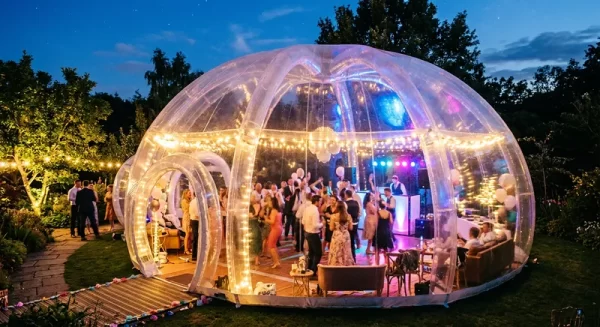
Sizing an inflatable party tent might sound straightforward, but it’s one of those decisions where experience counts. Many first-time buyers think about the number of guests only. In reality, you have to factor in equipment, food stations, seating arrangements, and even the flow of foot traffic. A tent that fits 100 people standing doesn’t necessarily accommodate the same number sitting down with tables.
Consider how the event will be used. Is it a casual gathering or a more formal sit-down dinner? Will there be space needed for entertainment, DJ booths, or display areas? Inflatable party tents come in various shapes and sizes, from compact 10×10 models to sprawling 30×40 layouts. Opting for a tent that’s too small leads to cramming and discomfort, while oversizing can make the space feel empty and impact rental costs. Picking the right size means balancing guest comfort with budget and operational needs.
Navigating Setup and Breakdown Realities
One of the main reasons professional event planners appreciate inflatable party tents is their relative ease of setup compared to traditional framed tents. But it’s not an autopilot process. Depending on the tent model and site conditions, inflatables require a clear, flat area and a reliable power source to keep them inflated. That usually means access to electricity or generators.
It’s important to plan your manpower carefully. While a skilled team can get an inflatable tent set up in under an hour, any oversight—like improper anchoring—can lead to unsafe situations. You’ve got to think about weather, too. Most inflatable tents hold up well in light winds and rain, but stronger gusts demand extra guy ropes or weighted anchors. The material’s durability helps, but correct setup is crucial.
Breakdown tends to be faster than traditional tents, which is a big advantage if timing is tight. However, pack-down requires care to avoid damage. The fabric and blower systems need to be dry and clean before storage—neglecting that leads to mildew or mechanical issues down the line.
Considering Branding and Customization Options
Inflatable party tents offer a unique opportunity to create standout branding at events. Unlike typical canopies, they provide large surface areas to print logos, slogans, or even full-color graphics. This turns a simple shelter into a marketing asset.
Choosing a tent that allows for customization can make all the difference if branding is a priority. Look for suppliers with experienced print partners and materials that hold ink well. Keep in mind, customization often requires a longer lead time, so planning well ahead is key.
However, be aware that colors and graphics might fade faster if the tent sees heavy sunshine or frequent rain. It’s practical to request samples or review past projects. Most clients find that bold colors and clear fonts retain impact better than overly intricate designs.
Balancing Portability Against Durability
The portability of inflatable party tents is a selling point, especially for distributors or planners who move equipment from site to site. Compared to rigid frame tents, inflatables pack down small and are lighter. This can mean fewer trucks on the road and easier handling by staff.
That said, durability varies widely. Thinner materials reduce weight but can wear out quickly under regular use, especially if dragged across rough surfaces or exposed to harsh elements. Conversely, heavy-duty fabrics increase lifespan but require more effort to transport and manage.
Ask yourself how often the tent will be used and under what conditions. If it’s a one-off or occasional use, lighter models might suffice. For weekly rentals or outdoor festivals, investing in more robust construction pays off by reducing maintenance and replacement costs.
Managing Ventilation and Comfort Inside the Tent
Inflatable party tents create enclosed spaces that can get warm and stuffy if not properly ventilated. This is particularly true during summer months or in areas with little natural airflow. Many tents come with built-in vents or windows, but these can be limited when you need to keep out insects or sudden rain.
Bringing in additional fans or climate control devices is often necessary for larger events. The challenge revolves around integrating these without disturbing the tent’s inflation system. For example, placing a fan near the tent entrance helps circulate air but might create drafts or complicate grounding the structure.
Practical experience tells us it pays to simulate the event environment before the actual day, checking how air moves inside the tent. Planning for flexible ventilation solutions—roll-up sides, removable panels—gives you options to adjust during use, tackling weather changes or fluctuating crowd sizes.
Assessing Site Compatibility and Anchoring Challenges
Not every event site is perfectly suited for an inflatable party tent. Hard surfaces like concrete or asphalt complicate anchoring, limiting options to weights rather than stakes. This can affect the tent’s stability, especially in windy conditions. On grass or soft soils, stakes work well, but you must know the holding conditions—sandy or rocky ground might not secure anchors reliably.
If your client’s site has overhead obstacles—trees, wires, signage—height restrictions may influence which inflatable tent model fits. Sometimes there’s a compromise between maximizing size and ensuring safety clearances.
Keep in mind that accessibility for vehicles during setup is necessary to bring in the tent and ancillary gear. Terrain that’s uneven, muddy, or tightly confined can add hours and cost due to extra labor or special equipment.
Planning the anchoring method is as important as selecting the tent itself. Each location calls for a tailored approach to guarantee safe, worry-free events.