
Table of Contents
Car Roof Tent for Different Vehicle Types
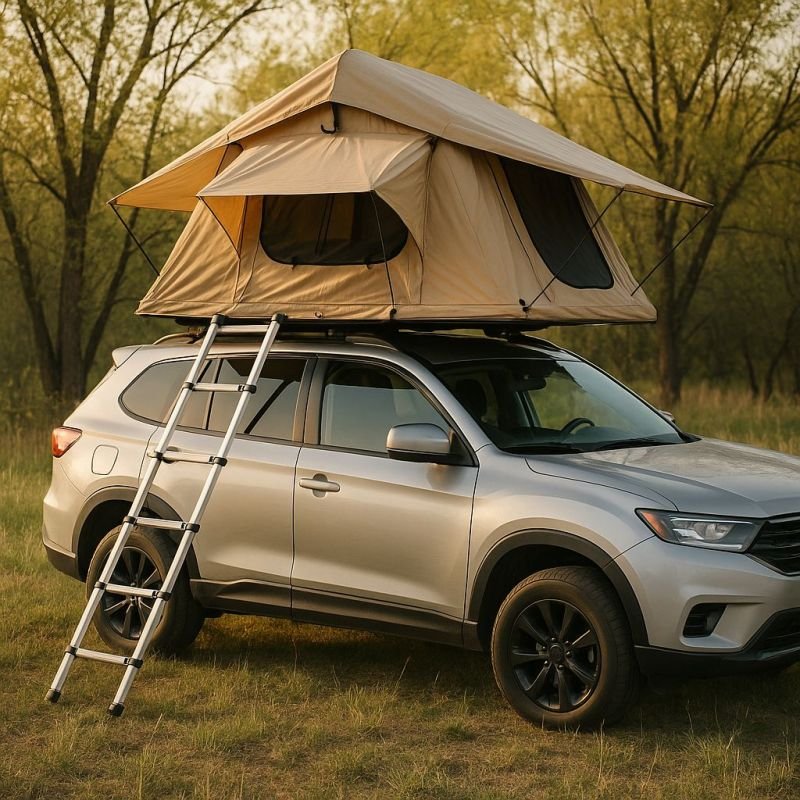
Selecting a car roof tent depends heavily on the type of vehicle you’ll be using it with. Not all vehicles have the same roof load capacity; SUVs and trucks usually handle heavier tents better than sedans or compact cars. It’s crucial to check the roof’s weight limit before making a decision because overloading can cause serious damage or safety issues during travel.
Roof racks or crossbars are essential for mounting a car roof tent. The compatibility of these racks varies, so make sure the tent you’re eying matches what your vehicle can support. Some tents are designed with universal mounting systems, but more often than not, you’ll find that specific racks provide a sturdier setup tailored for certain models. This ensures the tent remains secure, even when driving on rough terrain.
Space on the roof also matters. Larger tents offer more room inside but add considerable bulk. They can cause increased drag, potentially lowering fuel efficiency. Smaller tents are easier to handle and better suited for city driving or shorter trips but might feel cramped for longer stays. Balancing comfort, vehicle capability, and driving conditions will help you select the right fit.
Setting Up and Taking Down the Tent: Ease vs. Features
One of the main reasons event planners and distributors often favor particular car roof tents is the ease of setup. If your schedule involves quick turnarounds and demanding setups, a tent that unfolds or pops up in minutes makes a huge difference. Some models come with gas struts or fold-out designs that dramatically reduce the hassle.
However, tents that focus on quick assembly usually sacrifice certain features like thicker mattresses or extended awnings. On the other hand, more complex tents might include annex rooms, robust waterproof materials, or built-in LED lighting. These enhancements enhance comfort but add extra time to setup and takedown, and sometimes require additional hands to manage efficiently.
Knowing the balance between convenience and features will affect operational planning. If you’re coordinating multiple setups a day, quick-to-deploy tents will likely save time and labor costs. For longer-term events where attendee comfort is paramount, sturdier and more feature-rich tents make sense despite the increased setup time.
Weather Considerations: Durability and Practicality
Durability in different weather conditions is a decisive factor when choosing a car roof tent for client events or extended outdoor use. Not all tents perform equally when exposed to rain, wind, or intense sun.
Materials like ripstop nylon or polyester combined with quality waterproof coatings keep your tent dry but also need proper maintenance to prevent leaks or mold buildup. Ventilation is another key point. Tents designed with multiple mesh windows offer airflow filtering out condensation, which is a common complaint in more enclosed models.
Wind resistance hinges on the tent’s structural design and how securely it mounts to the car. For events in locations prone to unpredictable weather, look for tents with reinforced frames and strong anchoring points. Some models even come with adjustable guy ropes or additional stakes to provide extra stability if the car is parked on uneven ground.
Careful consideration of local climate and the intended duration of use will guide your recommendations to clients. A tent that performs well in one region might not be ideal in another, so tailor choices to the specific demands of each project.
Storage and Transport Logistics
Managing the storage and transport of car roof tents isn’t just about the tent itself but involves the entire logistical chain behind event preparation. These tents, by design, fold down compactly, but their weight and bulk can still pose challenges.
Warehouse space is often limited, and bulky items slow down inventory turnover. Some tents pack down smaller and lighter, making storage easier and reducing shipping costs. It’s worth factoring in the frequency of events and how often the tents need to be moved. Heavier tents may require vehicle hoists or specialized equipment during loading.
Transporting the tents safely is important, especially for distributors handling multiple consignments. Improper securing during transit can cause damage to the tent’s structural parts or fabric. Additionally, the shape can create awkward cargo loads, impacting vehicle balance.
A practical tip is to consider modular accessories or separate carrying bags to protect specific components. Tents that break down into smaller parts simplify transport but may slow assembly. Evaluating the trade-offs between storage convenience and setup speed helps streamline the entire operation.
Customization and Branding Opportunities
Event planners know how important branding is for client visibility. Car roof tents can be powerful mobile billboards with the right customization. Yet, not every tent candidate adapts well to signage.
The fabric type affects print quality and durability of logos or promotional messages. Canvas tents, for example, may absorb ink better, resulting in clearer images, whereas some synthetic materials resist paint or dye-based printing. Removable panels or attachable banners offer versatility but might reduce weather resistance.
Options for customization go beyond mere logos. Some tents come with interchangeable covers allowing for multi-event branding. Other accessories like awnings, sidewalls, or entrance flaps can be printed separately and swapped as needed.
However, the more customization involved, the greater the impact on cost and turnaround time for production. Distributors and planners have to weigh how often the tent will be rebranded against the investment in custom prints. For clients running frequent events, investing in adaptable solutions often proves more economical.
Ensuring Safety and Compliance
Safety is the backbone of responsible event equipment management. A car roof tent might seem straightforward, but improper use or installation can have serious consequences.
Weight distribution is a primary safety concern. Overloading the roof, especially on vehicles with limited capacity, affects handling and braking. This is a critical consideration during transit and when parked on uneven surfaces.
Legal requirements vary by region regarding vehicle-mounted equipment dimensions, weights, and even lighting. Ensuring your car roof tent setup complies prevents fines and certification issues. Some tents include reflective elements or can be fitted with additional safety features to increase visibility.
Regular maintenance and inspections are key to preventing accidents. Check mounting hardware for wear and corrosion, and inspect fabrics for damage that might affect structural integrity or waterproofing. Training for personnel responsible for installation and takedown reduces errors and enhances safety protocols.
Careful attention to these details protects not only your investment but also the end users and event attendees.


